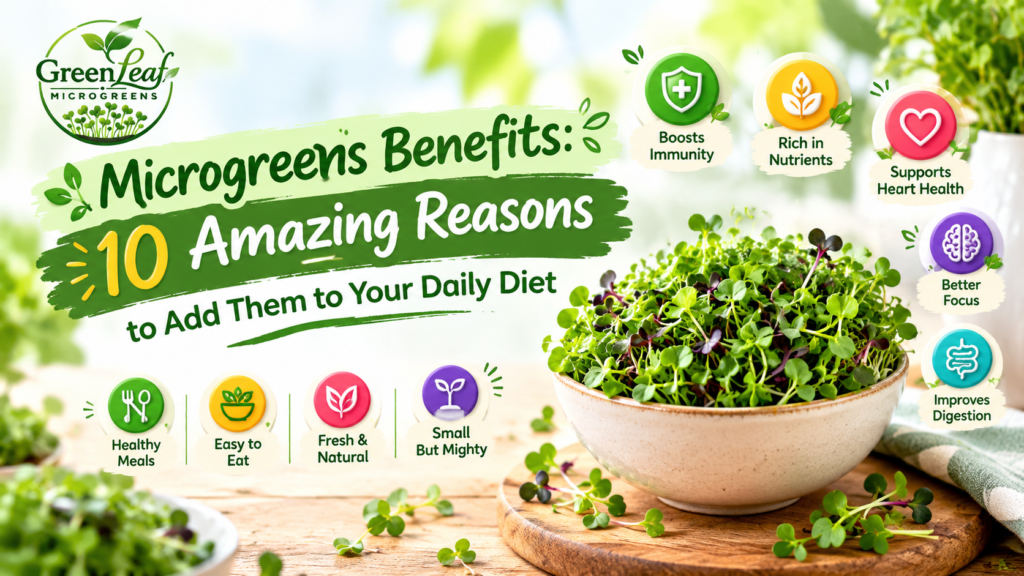
Have you ever wondered how something so small can add so much nutritional value to your meals? Microgreens are young edible plants harvested shortly after their first leaves develop. They may be tiny, but they can add flavor, color, and important nutrients to everyday meals.
From salads and sandwiches to smoothies and breakfast dishes, microgreens are easy to include in your regular diet. In this article, we’ll explore the health benefits of microgreens, practical ways to enjoy them, simple microgreens recipes, and tips on how to store microgreens properly.
What Are Microgreens?
Microgreens are young plants harvested at an early stage of growth, usually after the first true leaves begin to develop. They are different from sprouts because microgreens are generally grown in a growing medium and harvested above the growing medium.
Common varieties include broccoli, radish, sunflower, pea shoots, mustard, beet, and coriander microgreens. Each variety can have its own flavor, texture, color, and nutritional profile.
Because they are easy to add to many dishes, microgreens can be a simple way to bring more variety to your meals.
10 Health Benefits of Microgreens
1. Rich in Nutrients
One of the main health benefits of microgreens is their nutritional value. Depending on the variety, microgreens can provide vitamins, minerals, antioxidants, and other beneficial plant compounds.
Adding different varieties to your meals can help increase the variety of plant foods in your diet.
2. Provides Antioxidants
Microgreens contain naturally occurring antioxidant compounds. Antioxidants help protect cells from oxidative stress caused by free radicals.
Different types of microgreens contain different plant compounds, so eating a variety of greens can provide a broader range of nutrients.
3. Adds Vitamins and Minerals to Your Meals
Another reason people enjoy microgreens is that they can contribute vitamins and minerals to everyday meals. The exact nutritional content depends on the plant variety and growing conditions.
Adding a small handful to a meal can make your plate more colorful while contributing additional nutrients.
4. Supports a Balanced Diet
A healthy diet includes a variety of vegetables, fruits, whole grains, proteins, and other nutritious foods. Microgreens can complement this balanced eating pattern.
The health benefits of microgreens are best considered as part of an overall nutritious diet rather than as a replacement for other vegetables.
5. Makes Healthy Meals More Appealing
Healthy food does not have to be boring. Microgreens can add fresh colors, interesting textures, and different flavors to meals.
For example, spicy radish microgreens can add a peppery taste, while pea shoots can provide a mild and fresh flavor.
6. Easy to Add to Everyday Meals
One of the biggest advantages of microgreens is convenience. You usually don’t need complicated preparation.
You can add them to salads, wraps, sandwiches, soups, omelets, toast, or smoothies. This makes them an easy ingredient for people looking to add more plant foods to their meals.
7. Adds Variety to Your Diet
Eating a variety of vegetables is an important part of healthy eating. Microgreens are available in many varieties, giving you the opportunity to experiment with different flavors and textures.
Trying different varieties can make everyday meals more interesting.
8. Can Add Flavor Without Complicated Cooking
Many microgreens have distinctive flavors. Mustard and radish varieties can be spicy, while pea shoots can be mild and slightly sweet.
This means you can use them to add flavor and freshness without relying on complicated cooking methods.
9. Convenient for Quick Meals
Busy mornings do not always leave time for elaborate meal preparation. Microgreens can be added to a quick sandwich, toast, salad, or smoothie.
Their convenience makes them a practical ingredient for simple everyday meals.
10. Encourages More Plant-Based Food Choices
Adding microgreens to your meals can encourage you to experiment with more vegetables and plant-based ingredients.
Overall, the health benefits of microgreens make them an interesting addition to a varied and balanced diet.
How to Eat Microgreens in Everyday Meals

If you’re wondering how to eat microgreens, the good news is that there are many simple options.
You can enjoy them:
- On top of salads
- Inside sandwiches and wraps
- With avocado toast
- In smoothies
- With omelets and scrambled eggs
- As a topping for soups
- Alongside rice or grain bowls
- As a garnish for cooked dishes
When considering how to eat microgreens, choose varieties that match the flavor of your meal. Mild pea shoots work well in sandwiches and salads, while spicy radish microgreens can add extra flavor to wraps and bowls.
For many people, learning how to eat microgreens is simply about experimenting with different combinations and finding what tastes best.
Easy Microgreens Recipes to Try
You don’t need complicated cooking skills to enjoy them. Here are some simple microgreens recipes you can make at home.
1. Microgreens & Avocado Toast
Toast your favorite bread and add mashed avocado. Top it with fresh microgreens and a light sprinkle of seeds or seasonings.
2. Fresh Microgreens Salad
Combine lettuce, cucumber, tomatoes, carrots, and your favorite microgreens. Add a simple dressing made with lemon juice and olive oil.
3. Microgreens Sandwich
Add microgreens to a sandwich with vegetables, cheese, paneer, egg, or your preferred protein. They can add freshness and texture.
4. Green Microgreens Smoothie
Blend microgreens with fruits such as banana, apple, or pineapple along with water or your preferred milk.
These simple microgreens recipes can make it easier to include fresh greens in everyday meals.
When exploring microgreens recipes, try different varieties because each one can bring a different flavor and texture to your food.
How to Store Microgreens Properly

Knowing how to store microgreens can help maintain their freshness and quality.
Here are some simple tips:
- Keep microgreens refrigerated.
- Avoid storing them while they are excessively wet.
- Use a clean container that allows some airflow.
- Handle them gently to reduce damage.
- Check them regularly and remove any damaged leaves.
If you’re wondering how to store microgreens, the key is to keep them cool and avoid excess moisture.
Proper storage can help you enjoy your microgreens for longer while maintaining their freshness.
How to Eat Microgreens Without Overcomplicating Your Meals
If you’re still wondering how to eat microgreens, start small. Add a handful to a meal you already enjoy rather than creating an entirely new recipe.
For example, add them to your breakfast toast, lunch salad, evening sandwich, or dinner bowl.
This simple approach makes it easier to develop a habit of including more fresh greens in your meals.
Why Add Microgreens to Your Daily Diet?
The health benefits of microgreens combined with their versatility make them an interesting food to include in a balanced diet.
They can add color, flavor, texture, and a range of nutrients to everyday meals without requiring complicated preparation.
However, no single food provides everything your body needs. Microgreens work best as part of a varied diet that includes different vegetables, fruits, whole grains, protein sources, and healthy fats.
Frequently Asked Questions
What are the main health benefits of microgreens?
The health benefits of microgreens can include providing vitamins, minerals, antioxidants, and other plant compounds. Nutritional content varies depending on the specific variety.
How do you eat microgreens?
You can eat microgreens in salads, sandwiches, wraps, smoothies, toast, grain bowls, and many other dishes. Start with a small amount and experiment with different varieties.
What are some easy microgreens recipes?
Simple microgreens recipes include avocado toast, fresh salads, sandwiches, wraps, and smoothies. They require minimal preparation and can easily be adapted to your preferences.
How do you store microgreens?
To understand how to store microgreens, keep them refrigerated and avoid excessive moisture. Store them carefully in a clean container and check them regularly for freshness.
Can you eat microgreens every day?
Microgreens can be included as part of a varied and balanced diet. Eating a variety of vegetables and other nutritious foods is important rather than relying on one food alone.
Final Thoughts
Microgreens may be small, but they can bring plenty of variety to your everyday meals. From their nutritional value and fresh flavors to their convenience, there are many reasons to experiment with them.
Whether you add them to breakfast toast, lunch salads, smoothies, sandwiches, or dinner bowls, there are plenty of ways to enjoy them.
Start with one variety, try a few simple microgreens recipes, and discover which flavors you enjoy most. A small handful can be an easy way to make your everyday meals more colorful, fresh, and interesting.